

Cold War Briefing: Steinstucken Enclave
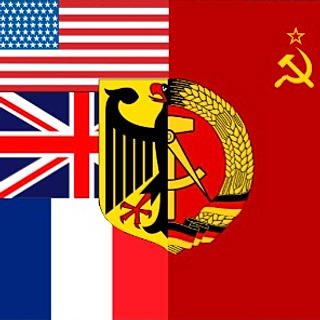
Briefing Issue 7- 3/1/26
Steinstucken West Berlin
Steinstücken, a quaint hamlet nestled in the southwestern outskirts of Berlin, became one of the most peculiar symbols of Cold War absurdity. Spanning just 12.67 acres (about 0.05 square miles) and home to roughly 200–300 residents during the era, it was a tiny exclave of West Berlin completely surrounded by East German territory. This isolated "island of freedom," as it was sometimes called, highlighted the bizarre border anomalies born from post-World War II divisions and the escalating tensions between East and West. From 1949 until its resolution in 1972, Steinstücken's story encapsulated the human costs of ideological conflict, involving daily border crossings, daring escapes, U.S. military ingenuity, and high-stakes diplomacy.
Historical Background
The origins of Steinstücken's exclave status trace back to the early 20th century. In 1920, as part of the Greater Berlin Act, the area—previously farmland acquired in 1787 and settled around 1817—was administratively incorporated into Berlin's Zehlendorf district, despite its physical disconnection from the city's core. This administrative quirk became geopolitically explosive after World War II. Berlin was divided into four Allied sectors, with the surrounding area falling under Soviet control, creating West Berlin as an enclave within East Germany.
By 1949, with the formal division of Germany into the Federal Republic of Germany (West) and the German Democratic Republic (East), Steinstücken emerged as West Berlin's only permanently inhabited exclave among twelve such pockets. Located in the American sector of West Berlin but geographically embedded in the East German district of Potsdam (near Babelsberg), it was less than a kilometer from the rest of West Berlin yet worlds apart in accessibility.
Life in Steinstücken during the Cold War was a precarious balance of resilience and restriction. Initially, residents could access West Berlin via informal paths through the surrounding forests, but escalating tensions closed these routes. In 1951, East German authorities attempted to annex the exclave, sending police and military forces to occupy it. The incursion was swiftly repelled following protests from U.S. forces, but it resulted in the permanent closure of all direct access to East Germany, leaving residents dependent on a single, heavily guarded 1 km road to West Berlin. This road required passing through *two* East German checkpoints daily—for work, school, shopping, or visiting family—turning routine errands into tense interrogations.

The construction of the Berlin Wall on August 13, 1961, amplified these hardships. While the main Wall snaked through Berlin, Steinstücken was encircled by simpler barbed-wire fences and watchtowers, patrolled by over 20 East German border guards. The exclave's vulnerability made it a hotspot for defections: several guards fled westward through Steinstücken, prompting East Germany to reinforce the barriers with concrete walls and minefields. Residents, mostly middle-class families and retirees, endured psychological strain from constant surveillance, economic isolation (no local shops or services), and the ever-present threat of Soviet or East German encroachment. One resident later recalled the "daily bravery" required to face armed guards, underscoring the human element of this geopolitical oddity.
Key Events and U.S. Intervention
Steinstücken's plight drew international attention, particularly from the United States, which administered its sector. A pivotal moment came on September 21, 1961, when U.S. General Lucius D. Clay—the "father" of the Berlin Airlift—made a dramatic helicopter visit to the exclave, defying East German protests. This bold gesture asserted Western resolve and led to the establishment of a U.S. military outpost. To bypass ground checkpoints, American soldiers were routinely airlifted in via helicopter, a operation that continued for a decade and symbolized American ingenuity against communist encirclement. A concrete helipad, now a memorial known as the "U.S. Hubschrauberlandeplatz," stands as a testament to this era.

The exclave also factored into broader Cold War maneuvers. It was one of ten such West Berlin pockets caught in a "tug-of-war" among the U.S., Soviets, and East Germans, with the latter viewing it as a humiliating capitalist thorn. Incidents like the 1951 standoff and post-Wall defections kept tensions high, but no major violence erupted, thanks to Allied vigilance.
The exclave's isolation ended through diplomacy rather than force. Negotiations in the late 1960s, amid thawing East-West relations, culminated in the Four Power Agreement on Berlin (signed September 3, 1971) by the U.S., UK, France, and Soviet Union. This paved the way for a practical solution: between 1971 and 1972, West Berlin constructed a secure corridor (Bernhard-Beyer-Straße) linking Steinstücken to the adjacent West Berlin neighborhood of Kohlhasenbrück in Wannsee. In exchange, West Berlin ceded six uninhabited exclaves to East Germany and paid 4 million Deutsche Marks for land adjustments.
A unique compromise addressed a railway line bisecting the area: West Berlin retained airspace rights and a bridge over Stahnsdorfer Straße, while East Germany kept the tracks below. This "hole in the wall" effectively integrated Steinstücken, ending its exclave status and easing resident burdens.
Legacy
Today, Steinstücken is a peaceful residential suburb within unified Berlin's Steglitz-Zehlendorf borough, its borders marked only by the lingering state line between Berlin and Brandenburg. The helipad memorial and remnants of the corridor serve as reminders of Cold War ingenuity and the fragility of freedom. The story of Steinstücken endures as a microcosm of divided Germany's absurdities, illustrating how ordinary people navigated extraordinary divides.
References
1. Wikipedia. "Steinstücken." Accessed October 9, 2025. https://en.wikipedia.org/wiki/Steinst%C3%BCcken.
2. The Berlin Wall. "Life in Steinstücken." February 28, 2014. https://www.the-berlin-wall.com/videos/life-in-exclave-steinstuecken-555/.
3. Atlas Obscura. "Steinstücken Exclave." January 23, 2024. https://www.atlasobscura.com/places/us-hubschrauberlandeplatz-denkmal-us-helicopter-platform-memorial.
4. Cold War Conversations. "The West Berlin Village Surrounded by the Berlin Wall." Accessed October 9, 2025. https://coldwarconversations.com/episode220/.
5. Outono.net. "Steinstücken: The Curious 'Island' of Liberty Surrounded by Communist Germany." August 29, 2022. https://www.outono.net/elentir/2022/08/29/steinstucken-the-curious-island-of-liberty-that-was-surrounded-by-communist-germany/.
6. Holly Hubbard Preston. "The Hole in the Wall: Steinstücken After the Fall of the Berlin Wall." November 8, 2021. https://hollyhubbardpreston.com/2021/11/08/the-hole-in-the-wall/.
7.Steinstuecken: A Little Pocket of Freedom.https://www.steinpocket.com/
Written by Edward Kane
Copyright © 2026 Cold War Outpost History Group


The city of Berlin, and especially the residents of Steinstuecken, still commemorate the American presence in the Cold War "exclave." Here is the centerpiece of the community's modern-day playground---a helicopter-shaped playset! The tail number is the actual tail number of a U.S. Army helicopter that the Americans named for the community ("The Spirit of Steinstuecken.")
Thank you for writing this!